



How to Maintain a Boat Engine? Winterization and Pre-Season Checks (Tekne TV)
The heart of any boat is its engine. Regular maintenance is essential for trouble-free cruising and long engine life. Whether you have a diesel or gasoline engine, the checks you perform during seasonal transitions and routine maintenance ensure safety, prevent unexpected breakdowns, and protect you from costly repairs.
As Tekne TV, we have compiled all the essential steps of boat engine maintenance for you.
1. Pre-Season Boat Engine Maintenance: Preparing for a “Full Throttle” Start
Before launching your boat after a long break, be sure to carry out the following checks:
Lubrication System and General Inspections
Engine Oil and Filter: Check the oil level and color. Dirty oil reduces performance and causes wear. Replace the oil and oil filter according to the manufacturer’s recommendations.
V-Belts: Inspect alternator and water pump belts for cracks, wear, or looseness. Adjust tension or replace if worn.
Batteries: Clean battery terminals, apply anti-corrosion gel, and secure them firmly. Check electrolyte levels and measure the charge status with a battery tester.
⛽ Fuel System Inspection
Fuel Filters: Water and sediment accumulated in fuel filters during winter are major threats to your engine. Replace both primary and secondary fuel filters.
Fuel Lines and Tank: Ensure there are no cracks or leaks in fuel hoses. If water or sediment has accumulated at the bottom of the fuel tank, clean it thoroughly.
Cooling System Inspection
Sea Water Strainer: Open and clean the strainer, removing any debris. A clogged strainer can cause engine overheating.
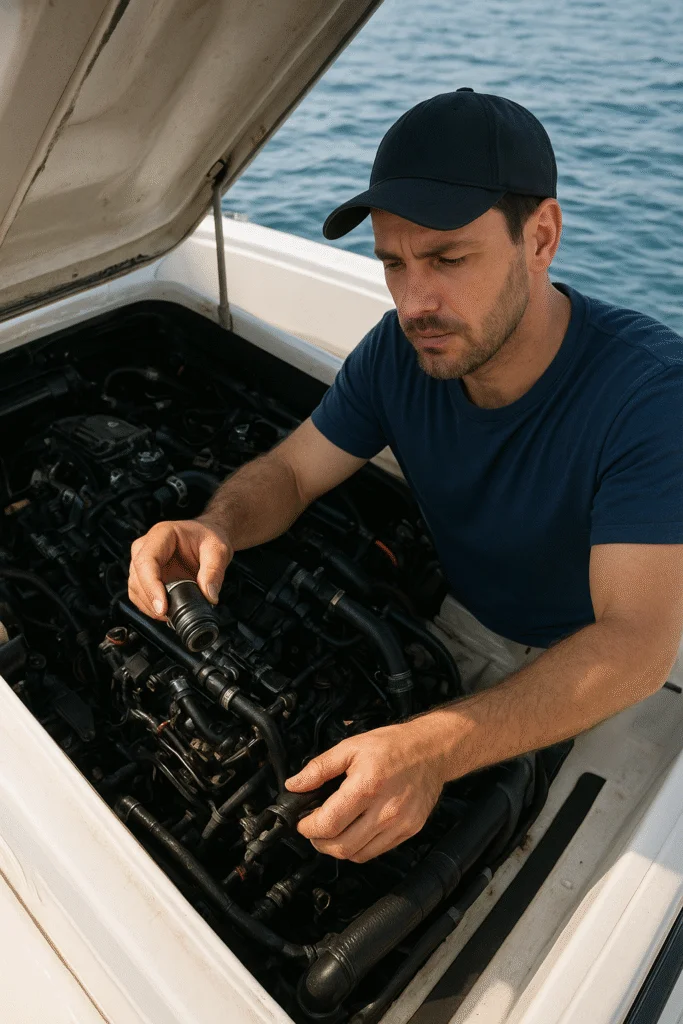
Impeller: Remove and inspect the rubber impeller of the sea water pump. If there are cracks, deformation, or broken blades, replace it immediately.
Hoses and Clamps: Check all cooling hoses for cracks and wear. Make sure clamps are tight and free of corrosion.
2. Winterization Process: Protecting Your Engine from Cold Conditions
Proper winterization is the key to starting the next season without issues.
Fuel System: If possible, fill the fuel tank completely and add a fuel stabilizer. This prevents fuel degradation and condensation-related water buildup.
Cooling System: Run the engine to flush the sea water system with fresh water. Then fill the system with antifreeze to protect against freezing.
Internal Engine Protection: Spray special winterizing oil into the cylinders through spark plug or injector ports to protect internal surfaces from corrosion.
Battery Care: Remove batteries from the boat, clean the terminals, fully charge them, and store them in a cool, dry place.
3. Key Differences Between Diesel and Gasoline Engines
Each engine type requires specific maintenance. Knowing which one you have ensures proper care:
Diesel Engines:
More durable and provide higher torque.
Fuel quality and cleanliness are critical; water separator filter maintenance must never be neglected.
Fuel injectors and high-pressure pumps are sensitive, making thorough fuel system protection during winterization essential.
Gasoline Engines:
Lighter and operate at higher RPMs.
Ignition system maintenance (spark plugs, distributor) is a priority.
Gasoline degrades faster than diesel, making fuel stabilizer use essential during winterization.
Conclusion: Maintenance Is the Best Marine Insurance
Regular boat engine maintenance is not just a routine—it is an investment in your safety and comfort at sea. A few hours of preventive maintenance can save you from major breakdowns and costly repairs in the middle of the season.
Always follow the instructions in your boat and engine manuals, and do not hesitate to seek professional assistance if you are unsure.
Tekne TV Note:
For practical tips, step-by-step maintenance videos, and the latest insights, be sure to subscribe to our YouTube channel and visit our website.